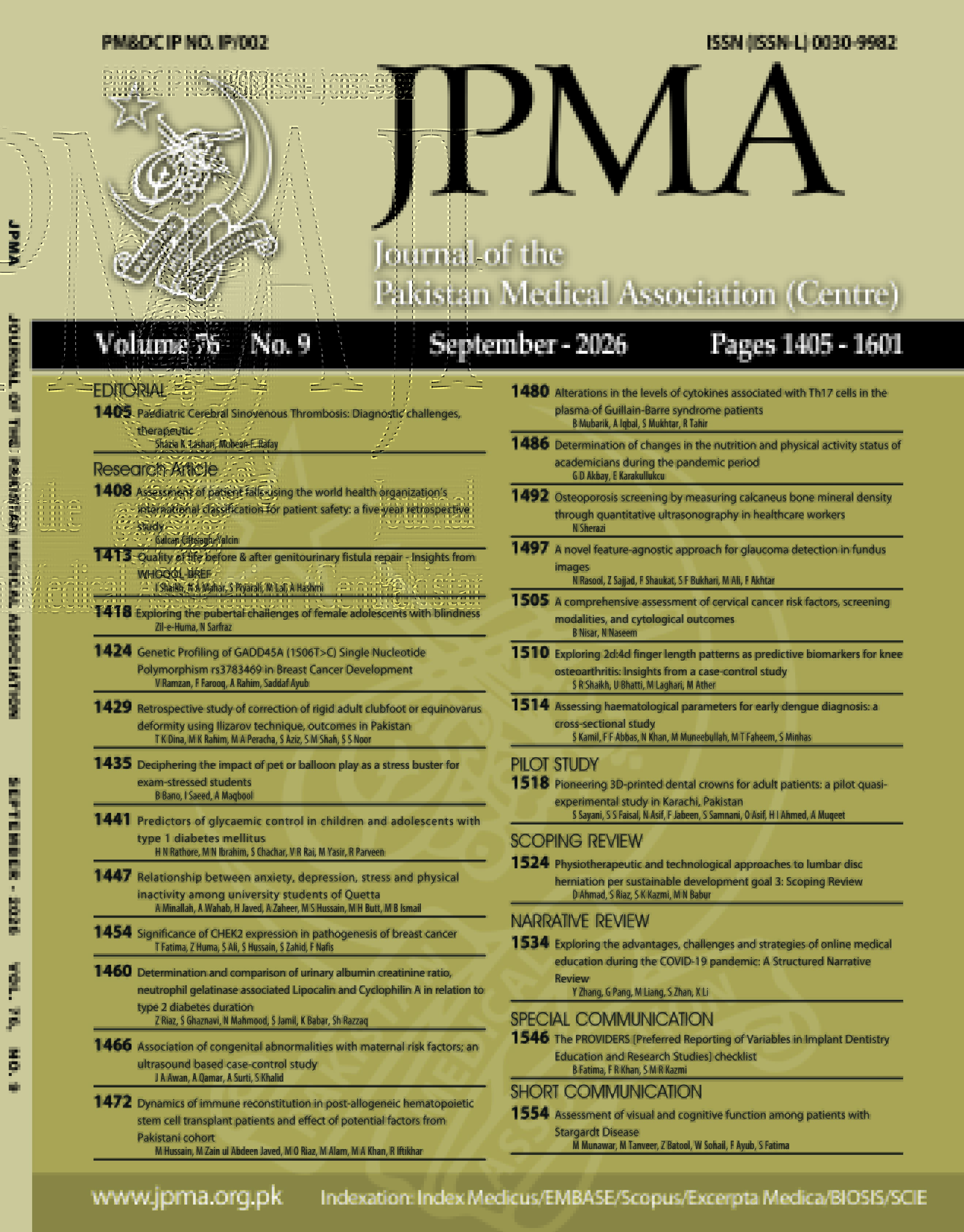
Predictors of glycaemic control in children and adolescents with type 1 diabetes mellitus
DOI:
https://doi.org/10.47391/JPMA.30291Keywords:
Adolescent, Caregivers, Child, Glycaemic control, Insulin, Type-1 diabetes mellitusAbstract
Objective: To identify the predictors of glycaemic control in children and adolescents with type-1 diabetes mellitus.
Method: The analytical, cross-sectional study was conducted at the Paediatric Endocrinology Department of the National Institute of Child Health, Karachi, from June to November 2024, and comprised children of both genders aged 2-18 years having definite diagnosis of type-1 diabetes mellitus with a disease duration >1 year. Glycated haemoglobin >7.5% was labelled as poor glycaemic control. Association of glycaemic control with various socio-demographic, clinical and management-related characteristics was explored. Data was analysed using SPSS 26.
Results: Of the 163 children, 83(50.9%) were girls. The overall median age at the time of presentation was 12.0 years (interquartile range: 9.0-14.0 years). The median glycated haemoglobin was 8.4% (interquartile range: 7.2-10.6). Good and poor glycaemic control was noted in 58(35.6%) and 105(74.4%) subjects, respectively. Primary caregiver being the father was independently associated with higher odds of poor glycaemic control (p=0.039). Insulin non-adherence (p=0.019) and irregular blood glucose monitoring (p<0.001) were significant independent predictors of poor glycaemic control. Patients with a check-up interval >2 months had higher odds of poor glycaemic control (p=0.010).
Conclusion: The prevalence of poor glycaemic control was high among children and adolescents with type-1 diabetes mellitus. Key glycaemic control indicators included adherence to insulin and blood glucose monitoring, caregiver involvement, and regular healthcare visits.
Key Words: Adolescent, Caregivers, Child, Glycaemic control, Insulin, Type-1 diabetes mellitus.
Downloads
Published
How to Cite
Issue
Section
License
Copyright (c) 2026 Journal of the Pakistan Medical Association

This work is licensed under a Creative Commons Attribution 4.0 International License.


